Why Redstar Coaching works:
As a manufacturing leader, your days are likely driven by hard metrics: throughput, overall equipment effectiveness (OEE), safety incidents, yield, and labor costs. In this environment, the traditional approach to leadership often leans heavily on “command and control” or carrot-and-stick motivation—do this to get a bonus, don’t do that, or you’ll get written up.
While those extrinsic motivators can drive short-term compliance, they rarely produce a proactive, high-performing culture. As a coach, I use Self-Determination Theory (SDT) because it provides a practical, evidence-based blueprint for shifting your workforce from merely compliant to fully committed.
The Three Pillars of SDT on the Shop Floor
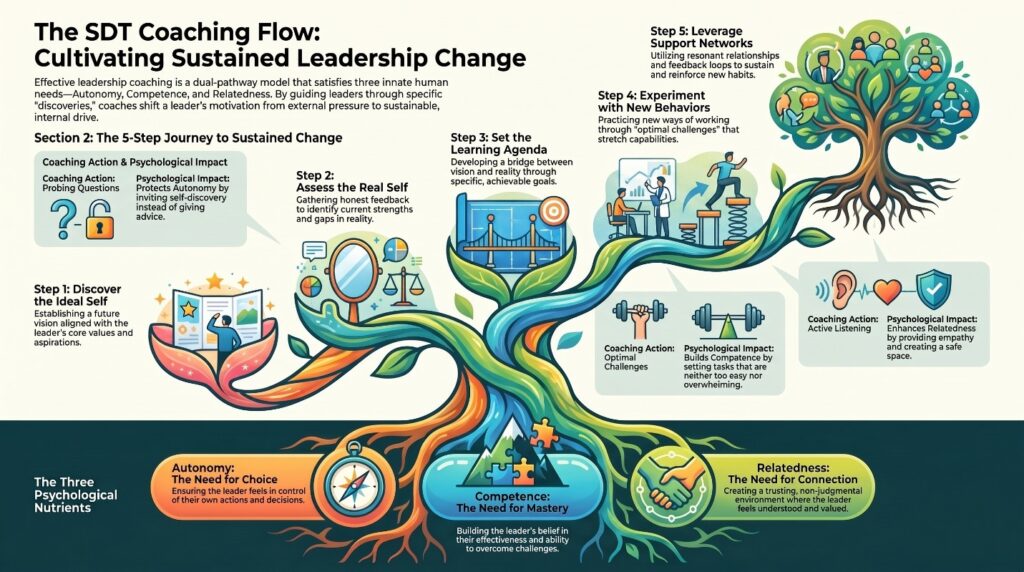
SDT proposes that human beings have three fundamental psychological needs that must be met to achieve sustained, intrinsic motivation. When you build a culture that supports these three areas, performance and retention naturally follow.
- Autonomy (Ownership within Boundaries)
- The Misconception: Autonomy in manufacturing leads to chaos, with people doing whatever they want, ignoring standard operating procedures (SOPs).
- The Reality: Autonomy means giving operators a sense of volition and ownership over how their work is done. It’s about asking for their input on process improvements, allowing them to troubleshoot before calling maintenance, or letting them organize their workstation. When operators feel they have a voice in the process, they stop acting like cogs in a machine and start acting like owners of their line.
- Competence (Mastery and Effectiveness)
- The Misconception: Training is just a compliance checkbox to ensure people don’t break the machines or get hurt.
- The Reality: People want to feel good at what they do. Competence is about providing the right tools, clear feedback (not just criticism), and a pathway to mastery. When a line worker understands why a machine faults and knows how to fix it, their confidence skyrockets. Fostering competence means building robust cross-training programs and celebrating technical problem-solving.
- Relatedness (Connection and Belonging)
- The Misconception: We are here to hit production numbers, not to make friends.
- The Reality: Manufacturing can be grueling, and shift work is notoriously tough on morale. Relatedness is about mutual respect, psychological safety, and feeling valued by leadership and peers. If an operator feels their supervisor actually cares about their safety and well-being—rather than just viewing them as a “headcount” to staff a shift—turnover drops significantly, and a genuine safety culture takes root.
Why This Approach Drives Results in Manufacturing
Applying SDT coaching to your leadership style directly impacts the most critical areas of your operation:
- Powers Continuous Improvement: Lean manufacturing and Six Sigma fail when they are forced from the top down. True continuous improvement requires intrinsic motivation. When operators have autonomy and competence, they will proactively identify bottlenecks and suggest waste-reduction strategies because they take pride in their work, not just because a manager told them to.
- Transforms the Safety Culture: Fear-based safety programs lead to hidden incidents and underreporting. A culture strong in relatedness and competence creates an environment where team members look out for one another and feel safe calling out hazards or stopping the line without fear of retribution.
- Drives Retention in a Tight Labor Market: You cannot always out-pay the warehouse or factory down the street. However, people rarely leave jobs where they feel respected, highly skilled, and in control of their daily environment. SDT provides the framework to become an employer of choice.
Ultimately, Red Star SDT coaching works because it aligns your need for high operational performance with your employees’ basic human need to feel valued, capable, and in control.